
What Happens If Your Solar Panels Produce More Electricity Than You Use?
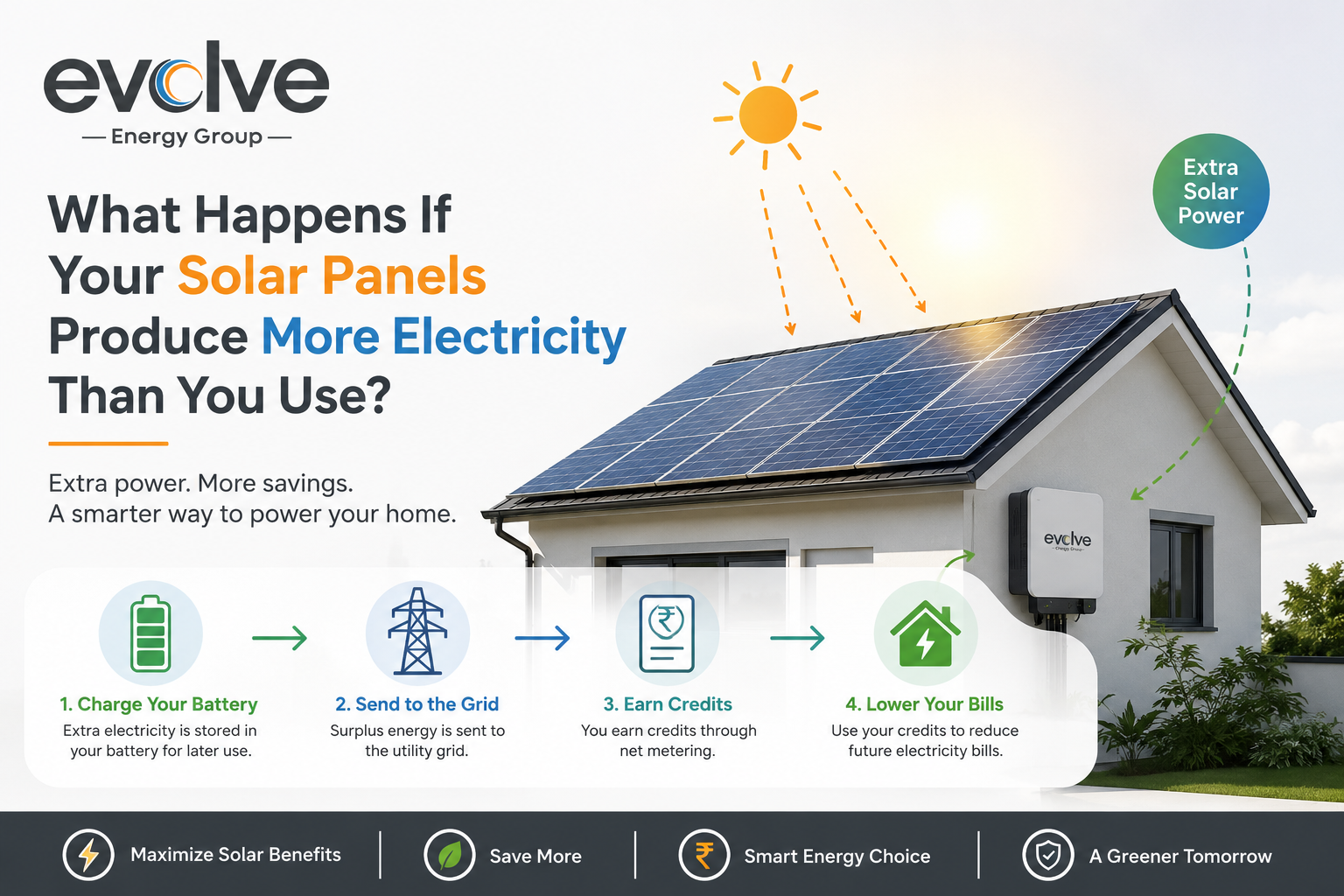
Have you ever wondered what happens when your solar panels generate more electricity than your home needs?Many homeowners ask this question before investing in a solar panel for home appliances. The good news is that extra solar energy does not go to waste. In most cases, you can store it, send it to the power grid, or use it later, depending on your solar setup.
At Evolve Energy Group, we help homeowners choose the right solar solutions that reduce electricity bills and improve energy independence.
This guide explains everything you need to know about excess solar power, how it works, and how you can get the maximum value from your investment.
Quick Answer
If your solar panel for home appliances produces more electricity than your home uses, the extra power can:
- Charge your solar battery (if installed)
- Go back to the electricity grid through net metering
- Earn electricity credits based on local utility policies
- Reduce your future electricity bills
- Support cleaner energy generation
Your options depend on your inverter, battery system, and electricity provider.
Why Do Solar Panels Produce Extra Electricity?
Solar panels often produce the highest amount of electricity during sunny afternoons.
At that time:
- Family members may be at work or school.
- Most appliances stay switched off.
- Electricity demand becomes lower than solar production.
As a result, your solar panel for home appliances generates more electricity than your home needs.
Instead of wasting that energy, modern solar systems manage it efficiently.
What Happens to the Extra Electricity?
1. The Power Charges Your Solar Battery
If your system includes battery storage, the extra electricity first charges the battery.
Later, when:
- The sun goes down
- Electricity demand increases
- There is a power cut (with compatible backup systems)
your home uses the stored energy instead of buying electricity from the grid.
Benefits
- Lower electricity bills
- Better energy backup
- More independence from the utility company
- Maximum use of solar energy
2. The Extra Power Goes to the Grid
If you do not have a battery, your inverter sends unused electricity to the utility grid.
This process is called grid export.
Many homeowners with a solar panel for home appliances use this option because it provides additional value from the electricity they generate.
3. You May Receive Net Metering Credits
In many locations, electricity providers offer net metering.
With net metering:
- Your home exports unused electricity.
- The utility records the exported units.
- You receive credits on your electricity bill.
- Those credits offset the electricity you use later.
For example:
Your solar system generates 30 units in one day.
Your home only uses 18 units.
The remaining 12 units go to the grid.
Later, when your home uses grid electricity at night, those exported units can reduce your electricity costs, depending on your local utility rules.
Frequently Asked Question
1.Does Extra Solar Power Go to Waste?
No.
A properly designed solar panel for home appliances does not waste electricity.
The system will:
- Store it in batteries
- Export it to the grid
- Reduce future electricity bills through available utility programs
2.What If My Solar System Is Off-Grid?
An off-grid solar system works differently.
Since it is not connected to the utility grid:
- Extra electricity charges the batteries first.
- Once batteries become full, the system reduces solar production automatically.
- Some systems divert excess power to water heaters or other controlled loads.
That is why proper battery sizing is very important.
3.Can I Earn Money from Extra Solar Electricity?
This depends on your state’s electricity policy.
Some utility providers offer:
- Net metering
- Net billing
- Feed-in tariff programs
In these cases, exporting extra electricity may lower your electricity bill or provide credits.
Your local regulations determine the exact benefits.
4.How to Make the Most of Extra Solar Power?
Run Appliances During Daytime
Use energy-intensive appliances when sunlight is strongest.
Examples include:
- Washing machine
- Dishwasher
- Water pump
- Air conditioner
- Electric vehicle charger
- Water heater
This allows your solar panel for home appliances to power them directly.
Install Battery Storage
Battery storage increases solar self-consumption.
Benefits include:
- Better backup during outages
- Lower grid dependence
- Higher savings
- More efficient use of solar energy
Choose the Right Solar System Size
Many homeowners think installing the biggest system will save the most money.
That is not always true.
A professional solar assessment considers:
- Monthly electricity usage
- Roof size
- Future appliance needs
- Budget
- Local utility regulations
A correctly sized solar panel for home appliances delivers the highest return on investment.
FAQ
1.Is it bad if my solar panels produce too much electricity?
No. Modern solar systems safely manage extra electricity through batteries or grid export.
2.Can solar panels overproduce electricity?
Yes. On sunny days, solar panels may produce more electricity than your home uses.
3.Should I buy a battery?
A battery is a great option if you:
- Want backup during power cuts
- Use more electricity at night
- Want greater energy independence
4.What happens if the grid is down?
A standard grid-connected solar system usually shuts down for safety.
However, hybrid systems with battery backup can continue supplying electricity to selected appliances.
5.Will extra solar power reduce my electricity bill?
Yes.The more electricity you use from your own solar panel for home appliances, the lower your dependence on the utility grid.
6.Benefits of Producing More Solar Electricity
When your system generates extra electricity, you can enjoy:
- Lower monthly electricity bills
- Better return on investment
- Reduced carbon footprint
- Improved energy security
- Greater savings over the life of your system
- More value from your rooftop space
Why Choose Evolve Energy Group?
Choosing the right solar partner matters just as much as choosing the right equipment.
At Evolve Energy Group, we provide:
- High-performance solar panels
- Reliable solar inverters
- Expert system design
- Professional installation
- Complete rooftop solar solutions
- After-sales support
- Long-term performance guidance
Whether you need a solar panel for home appliances or a complete residential solar solution, our team helps you maximize your energy savings with quality products and expert service.
Conclusion
Producing more electricity than you use is actually a good thing.
Your solar panel for home appliances can store extra energy in batteries, send it to the grid, or help reduce your future electricity bills through available utility programs. The right system design ensures that every unit of solar energy delivers maximum value.
If you are planning to install a rooftop solar system, partner with Evolve Energy Group. Our experts will help you choose the ideal solar solution for your home’s energy needs, ensuring long-term savings, reliable performance, and a smarter investment.
Ready to lower your electricity bills? Contact Evolve Energy Group today for a free solar consultation and find the perfect solar panel solution for your home.

Evolve Energy