
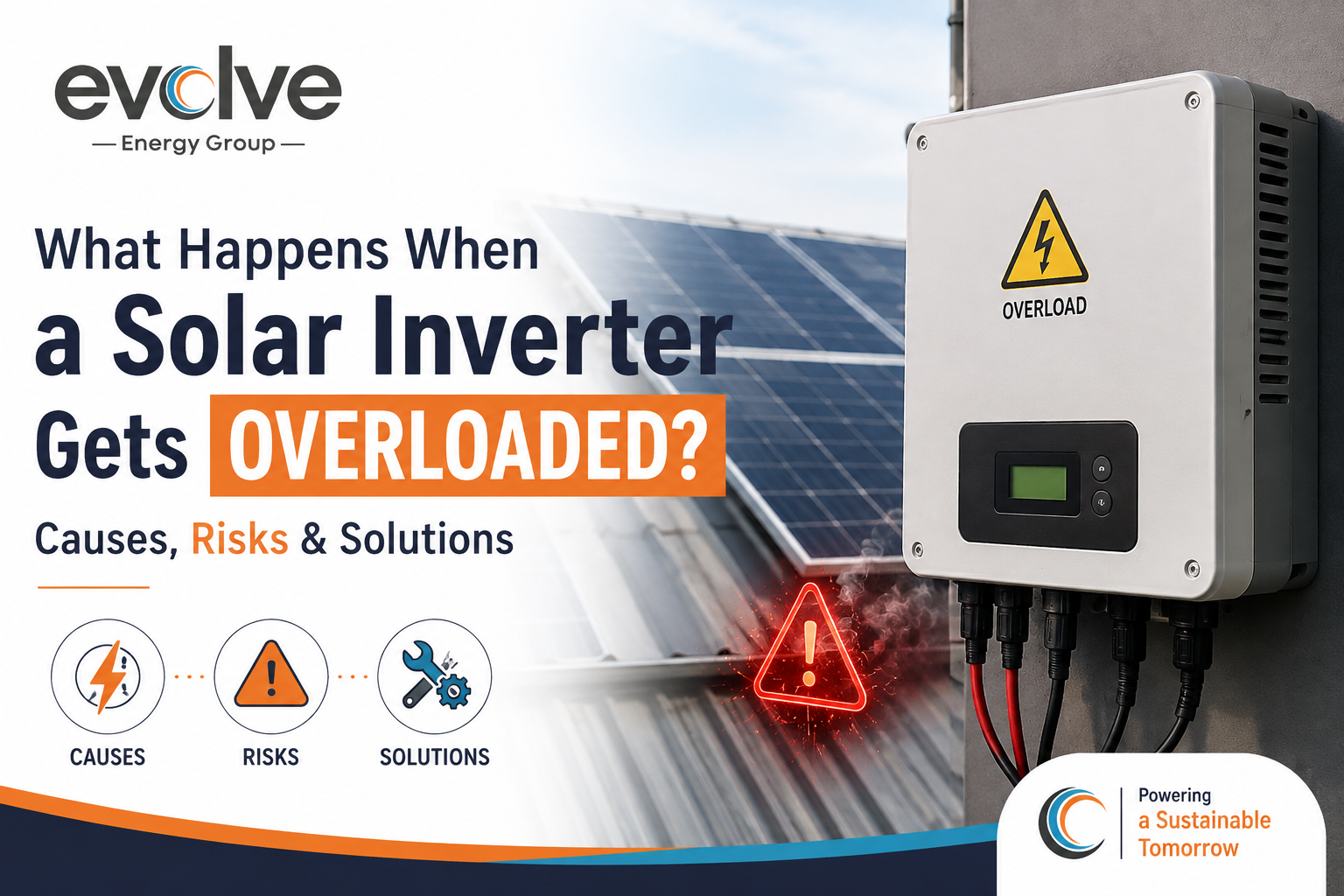
What Happens When a Solar Inverter Gets Overloaded? Causes, Risks & Solutions
Your solar inverter is the heart of your solar system. It turns sunlight into power you can actually use. But like any hardworking device, it has limits. Push it too hard, and it will overload.
So what happens when a solar inverter gets overloaded? In short, it can shut down, trip, overheat, or in bad cases, get damaged for good. This can happen suddenly, and it often catches homeowners off guard.
In this guide, we break down the causes, the risks, and the real solutions. We will also show you why a solar power hybrid inverter from Evolve Energy Group solves most of these problems before they even start.
Let’s get into it.
What Does “Solar Inverter Overload” Actually Mean?
An overload happens when you ask your inverter to handle more power than it can manage. Every inverter has a rated capacity, say 5kW or 8kW. If your appliances and loads demand more than that number, the inverter hits its limit.
Think of it like a water pipe. A pipe made for a certain flow rate can’t suddenly carry double the water. It will burst, or the flow will stop. Your inverter reacts the same way when the load gets too heavy.
This is one of the most common problems solar owners face, and it is completely avoidable with the right setup and the right inverter.
Common Signs Your Solar Inverter Is Overloaded
You don’t need to be an electrician to spot the warning signs. Watch out for these:
- Sudden power cuts even on a sunny day
- The inverter display shows an “overload” or “fault” error
- Strange beeping or alarm sounds from the unit
- The inverter feels unusually hot to touch
- Frequent tripping of the circuit breaker
- Appliances running slower or flickering lights
If you notice any of these, don’t ignore them. An overloaded inverter is your system’s way of asking for help.
Top Causes of Solar Inverter Overload
Let’s look at why this happens in the first place. Most causes come down to poor planning or an outdated setup.
1. Undersized Inverter Capacity
This is the number one cause. If you buy a small inverter but run heavy appliances like ACs, water heaters, and washing machines together, the inverter simply can’t keep up.
2. Too Many Devices Running at Once
Every appliance draws power. Run too many at the same time, especially high-wattage ones, and you cross the inverter’s safe limit fast.
3. Wrong Inverter Sizing During Installation
Some installers size the inverter based only on your solar panel output, not your actual home load. This mismatch causes overload issues down the line.
4. Old or Low-Quality Inverter
Older inverters, or cheap models, often have weaker overload protection. They fail faster under stress compared to modern, well-built units.
5. Grid Fluctuations and Voltage Spikes
Sudden voltage spikes from the grid can push your inverter past its safe operating range, especially in areas with unstable power supply.
6. Battery Mismatch in Hybrid Systems
In a hybrid solar setup, if your battery bank size doesn’t match your inverter rating, the system can overload during high-demand hours or storage cycles.
Risks of Running an Overloaded Solar Inverter
Ignoring an overload isn’t just inconvenient. It can cost you money, and in worst cases, safety.
- System Shutdown: The inverter trips and cuts power to protect itself, leaving you without electricity at the worst time.
- Permanent Hardware Damage: Repeated overloads wear out internal components. Over time, this can burn out the inverter completely.
- Reduced Inverter Lifespan: Even if it doesn’t fail immediately, constant overload stress shortens the life of your investment.
- Fire Hazard: Overheating components in an overloaded inverter can, in rare cases, pose a fire risk.
- Higher Repair Costs: Fixing or replacing a damaged inverter is far more expensive than preventing the issue in the first place.
- Warranty Issues: Some manufacturers void warranty claims if damage is linked to consistent overloading.
This is exactly why choosing the right inverter, and using it correctly, matters so much.
How to Prevent Solar Inverter Overload
The good news? Overload is one of the easiest solar problems to prevent. Here’s how:
1. Get the Right Inverter Size
Always match your inverter capacity to your actual home load, not just your panel output. A professional load audit from Evolve Energy Group helps you get this right from day one.
2. Avoid Running Too Many Heavy Appliances Together
Stagger the use of high-wattage devices like geysers, ACs, and motors. Spreading the load out keeps your inverter well within safe limits.
3. Upgrade to a Solar Power Hybrid Inverter
A solar power hybrid inverter is built to manage solar, battery, and grid power together. It balances the load smartly, switching sources as needed, so no single source gets overloaded.
4. Install Overload Protection Features
Modern inverters come with built-in protection that shuts down safely before damage occurs. Always choose a model with strong safety certifications.
5. Schedule Regular Maintenance Checks
Routine checks catch small issues before they turn into overload emergencies. Evolve Energy Group offers maintenance plans to keep your system running at its best.
6. Size Your Battery Bank Correctly
For hybrid systems, match your battery storage capacity to your inverter rating. This keeps charging and discharging cycles smooth and overload-free.
Why Choose a Solar Power Hybrid Inverter from Evolve Energy Group?
At Evolve Energy Group, we don’t just sell inverters. We design solar systems that actually fit your home’s needs.
Here’s what sets us apart:
- Real Field Experience: Our team has installed and serviced solar systems across countless homes and businesses, so we know exactly where overload issues start.
- Smart Load Management: Our solar power hybrid inverter range automatically balances solar, battery, and grid power, cutting overload risk to near zero.
- Certified, Reliable Products: We only work with inverters that meet strict safety and quality standards.
- Custom Sizing: We calculate your exact load needs before recommending any inverter, no guesswork, no oversized bills, no undersized risk.
- Ongoing Support: From installation to after-sales maintenance, our experts stay with you for the long run.
When you choose Evolve Energy Group, you get a system built to handle real-world demand, not just lab conditions.
Frequently Asked Questions
1. What happens when a solar inverter gets overloaded?
The inverter usually trips and shuts down to protect itself. If overload happens repeatedly, it can damage internal components and shorten the inverter’s life.
2. Can an overloaded inverter catch fire?
It’s rare, but yes, prolonged overheating from overload can pose a fire risk. This is why quality protection features matter so much.
3. How do I know my inverter is undersized?
If it trips often, shows overload errors, or struggles when you run two or more heavy appliances together, it’s likely undersized for your home.
4. Is a hybrid inverter better for avoiding overload?
Yes. A solar power hybrid inverter manages multiple power sources at once and balances the load smartly, making overload far less likely than with a standard inverter.
5. How often should I get my inverter checked?
We recommend a professional check every six months, or sooner if you notice any warning signs like heating, tripping, or unusual noise.
Conclusion
An overloaded solar inverter isn’t just an inconvenience. It’s a warning sign your system needs a closer look. The causes are usually simple: wrong sizing, too many appliances at once, or an outdated unit that can’t keep up. The fix is simple too, with the right inverter and the right guidance.
If you want a system that just works, day after day, without sudden shutdowns or repair bills, it’s time to upgrade.
Ready to stop worrying about inverter overload?
Talk to Evolve Energy Group today and get a free load assessment for your home or business. Explore our solar power hybrid inverter range and see why homeowners trust us for reliable, long-lasting solar solutions.

Evolve Energy