
Solar Energy for Data Centres: Can Solar Meet India’s Growing Power Demand?
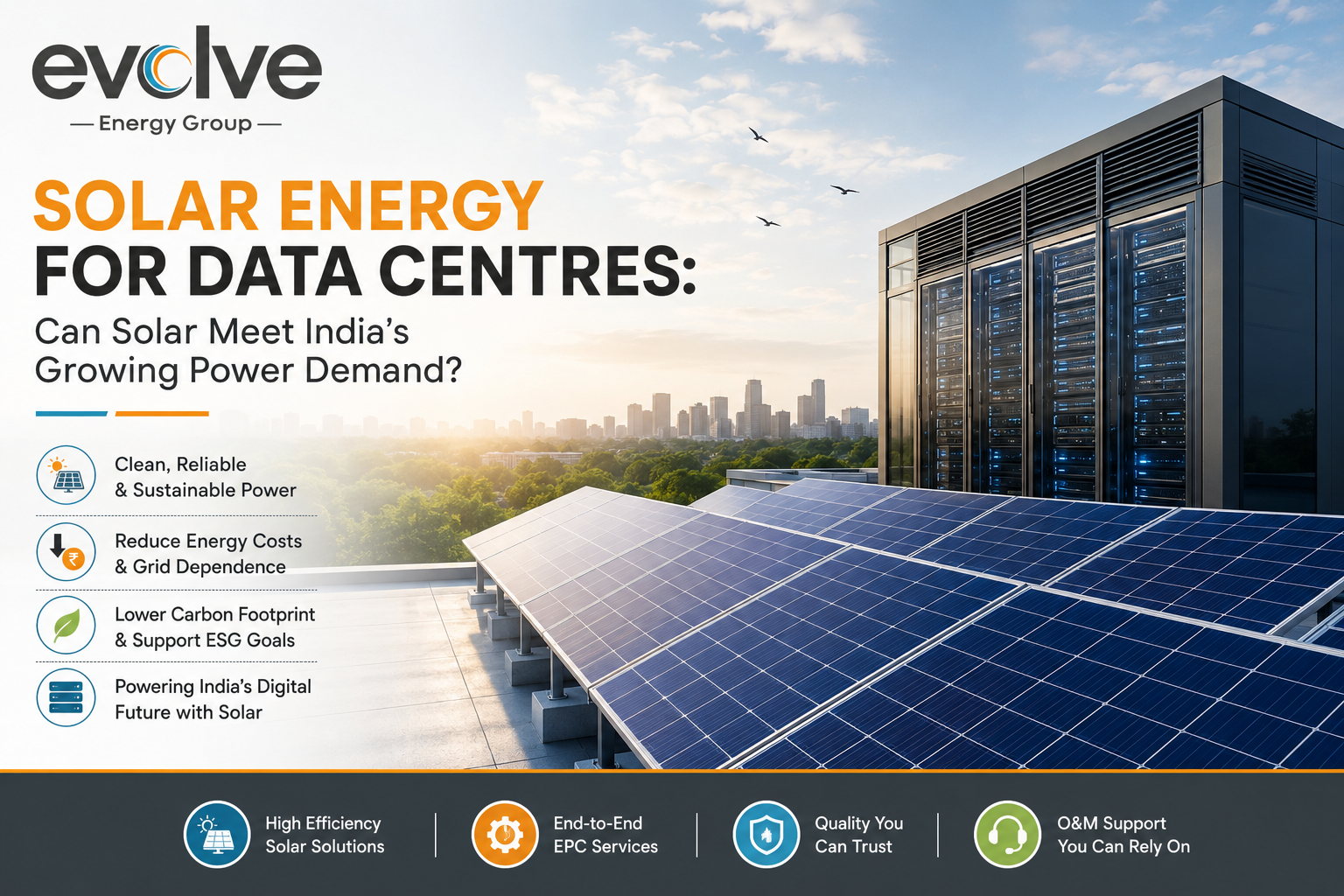
India’s data centre industry is expanding quickly. Cloud computing, artificial intelligence, digital payments, streaming, online services, and enterprise applications are increasing the need for reliable computing infrastructure. But every data centre needs one thing in large quantities: electricity.
This raises an important question: Can solar power for data centres meet a meaningful share of India’s growing data centre energy demand?
The answer is yes, but solar works best as part of a wider energy strategy rather than as the only power source.
Solar can help data centres reduce grid dependence, control long-term electricity costs, lower carbon emissions, and support corporate sustainability goals. With the right solar modules, inverters, energy storage, grid connection, and EPC planning, data centre operators can build a reliable renewable energy system around their high and continuous power demand.
For organisations planning such projects, working with an experienced best solar panels company can make a major difference because data centres need more than standard solar installation. They need careful system design, monitoring, power quality management, and long-term maintenance.
Why Do Data Centres Need So Much Power?
A data centre runs servers, cooling systems, networking equipment, security systems, lighting, backup systems, and other electrical infrastructure.
Unlike many commercial buildings, data centres operate around the clock.
Their electricity demand comes mainly from:
- IT servers and computing equipment
- Cooling and air-conditioning systems
- UPS systems
- Networking equipment
- Lighting
- Security and monitoring systems
- Fire and safety systems
- Pumps and auxiliary equipment
- Battery and backup infrastructure
Cooling can also account for a significant part of a data centre’s total electricity consumption, especially in India’s warm climate.
This makes energy efficiency and renewable power important parts of modern data centre planning.
Can Solar Power Meet Data Centre Energy Demand?
Solar power can meet part of a data centre’s electricity requirement, but a standalone solar plant usually cannot provide 24/7 power on its own.
Solar generation changes throughout the day and stops after sunset. Data centres, however, need continuous electricity.
The practical solution involves combining multiple energy sources and technologies.
A data centre may use:
Solar PV + Grid Power + Battery Energy Storage + Backup Power
This approach allows solar energy to reduce daytime grid consumption while batteries and other backup systems support power availability when solar generation falls.
For larger facilities, operators can also explore off-site solar plants, open-access renewable power, group captive models, or renewable energy procurement, depending on applicable regulations and project economics.
How Solar Power for Data Centres Works
A typical solar system for a data centre includes several key components.
1. Solar PV Modules
Solar panels convert sunlight into DC electricity.
For large commercial installations, module efficiency, temperature performance, degradation rate, warranty, mechanical strength, and long-term reliability matter.
A data centre cannot afford frequent performance issues, so module selection should focus on lifetime energy generation rather than only the initial purchase price.
Evolve Energy Group manufactures PV modules designed for residential, commercial, and industrial applications and provides different module technologies, including TOPCon and bifacial options.
2. Solar Inverters
The inverter converts DC electricity from the solar modules into AC electricity that the facility can use.
For a data centre, the inverter should offer:
- High conversion efficiency
- Reliable operation
- Real-time monitoring
- Grid compatibility
- Strong protection features
- Easy maintenance
- Suitable capacity for the planned solar plant
Modern solar inverters can also provide advanced monitoring and grid management functions.
3. Energy Storage
Battery Energy Storage Systems, commonly called BESS, can store excess solar electricity and make it available when required.
For data centres, storage can support:
- Peak-load management
- Solar energy shifting
- Short-duration backup support
- Better renewable energy utilisation
- Reduced dependence on grid power during selected periods
However, battery capacity should match the actual load profile and reliability requirements of the facility.
4. Energy Management System
An intelligent energy management system can monitor:
- Solar generation
- Data centre load
- Grid consumption
- Battery charge and discharge
- Power quality
- System performance
This data helps operators make better decisions about energy usage and system performance.
Why Should Data Centres Invest in Solar?
Solar power offers several benefits for data centre operators.
Lower Long-Term Electricity Costs
Electricity is one of the major operating expenses for large data centres.
A properly designed solar project can reduce the amount of electricity purchased from the grid and provide long-term energy savings.
The exact financial benefit depends on:
- Solar plant size
- Electricity tariff
- Location
- Solar generation
- Financing model
- Land or rooftop availability
- Open-access regulations
- Energy consumption pattern
A professional feasibility study should calculate the expected savings before investment.
Reduced Carbon Emissions
Data centres consume large amounts of electricity. Increasing the renewable share of their energy mix can help reduce associated carbon emissions.
This can support corporate ESG targets and renewable energy commitments.
Better Energy Planning
Solar gives businesses an additional source of electricity instead of depending completely on conventional grid supply.
When combined with storage and suitable backup systems, solar can become part of a broader energy resilience strategy.
Long-Term Renewable Energy Strategy
As India’s digital infrastructure expands, renewable energy can help data centre companies manage rising energy demand while supporting sustainability goals.
What About Solar at Night?
This is one of the most common questions about solar power for data centres.
Solar panels do not generate electricity at night.
Therefore, a data centre cannot depend only on rooftop or ground-mounted solar for continuous nighttime operation.
Instead, operators can consider a combination of:
- Grid electricity
- Battery storage
- Renewable energy purchased from external projects
- Backup generation
- Energy management systems
The right combination depends on the facility’s load profile and reliability requirements.
Rooftop Solar vs Off-Site Solar for Data Centres
Data centre operators generally have two broad options.
Rooftop Solar
Rooftop solar can work well where the building has sufficient roof area and structural capacity.
Benefits include:
- Use of existing space
- On-site electricity generation
- Reduced transmission losses
- Direct connection to facility loads
However, the available roof area may not be large enough to generate a significant share of a large data centre’s total electricity consumption.
Off-Site Solar Plant
Large data centres may consider an off-site solar plant when their electricity requirement is much higher than the available rooftop area.
This can provide access to a larger solar generation capacity.
However, the project must consider:
- Land
- Transmission
- Grid connectivity
- Regulations
- Wheeling and banking arrangements
- Project financing
- Solar resource
- Power purchase structure
India’s growing renewable capacity also makes grid and transmission planning increasingly important. Recent reporting has highlighted transmission constraints and renewable power curtailment in some regions, showing why project location and grid planning matter.
How Much Solar Capacity Does a Data Centre Need?
There is no single solar capacity that fits every data centre.
For example, a facility’s requirements will depend on:
Total electricity consumption + peak demand + operating hours + available solar area + solar irradiation + desired renewable energy share
A simplified feasibility process looks like this:
Step 1: Analyse Electricity Consumption
Review at least 12 months of electricity bills and interval data where available.
Look at:
- Monthly consumption
- Maximum demand
- Daytime consumption
- Nighttime consumption
- Seasonal variations
- Peak-load periods
Step 2: Assess Available Space
Check the roof or available land for:
- Solar modules
- Inverters
- Electrical equipment
- Access pathways
- Maintenance areas
Step 3: Estimate Solar Generation
The EPC team should calculate expected annual generation based on location, system size, module technology, orientation, shading, temperature, and system losses.
Step 4: Compare Costs and Savings
Calculate:
- Project cost
- Annual energy generation
- Electricity savings
- Operating expenses
- Financing cost
- Payback period
- Long-term return
Step 5: Select the Right System
Based on the results, the business can choose between rooftop solar, ground-mounted solar, off-site renewable power, or a hybrid approach.
What Should Data Centres Look for in a Solar Partner?
Choosing a solar partner requires more than comparing the lowest quotation.
A data centre should evaluate the provider’s:
Engineering Capability
The solar company should understand high-load commercial and industrial applications and design the system around the facility’s actual energy profile.
Product Quality
Solar modules, inverters, mounting structures, cables, connectors, and other components should meet appropriate quality and safety requirements.
Monitoring Capability
Real-time monitoring can help identify performance issues quickly.
EPC Experience
A capable EPC partner should manage engineering, procurement, construction, commissioning, and documentation as one coordinated process.
O&M Support
Solar performance can decline if cleaning, inspection, preventive maintenance, and fault detection receive little attention.
Evolve Energy Group provides end-to-end EPC services covering design, procurement, construction, commissioning, and O&M support. Its EPC solutions also cover commercial and industrial applications such as IT parks and other large facilities.
Why Choose Evolve Energy Group for Data Centre Solar Projects?
For a data centre, the solar partner needs to understand the complete energy system rather than only install panels.
Evolve Energy Group offers an integrated approach covering solar modules, solar inverters, BOS components, EPC, installation, and O&M. The company states that it manufactures PV modules and solar inverters through its in-house facilities and follows quality controls across its products.
Its EPC team provides end-to-end project support, including system design, procurement, construction, commissioning, and ongoing maintenance.
For organisations looking for a solar power company in Chennai, Evolve Energy Group also provides solar EPC solutions in Chennai and across commercial and industrial applications.
This integrated approach can help businesses simplify project coordination and build a solar system around their actual energy requirements.
Is Solar a Good Investment for Data Centres in India?
Yes, solar can be a strong investment for data centres when the project is properly designed and financially evaluated.
However, businesses should not look at solar as simply a panel installation.
The best results come from treating solar as part of a complete energy strategy.
A successful project should consider:
- Solar generation
- Data centre load
- Grid availability
- Battery storage
- Backup requirements
- Power quality
- Cooling demand
- Electricity tariffs
- Renewable energy regulations
- Future expansion
- Long-term O&M
India’s solar sector continues to expand rapidly, while electricity demand is also rising. Recent reporting shows the country’s renewable and solar capacity continuing to grow, increasing the opportunity for businesses to integrate clean energy into their long-term power plans.
Frequently Asked Questions
Can solar power run a data centre 24/7?
Solar alone generally cannot provide 24/7 electricity because solar generation depends on sunlight. Data centres can combine solar with grid power, battery storage, and other backup systems to create a reliable energy strategy.
Is solar power suitable for data centres in India?
Yes. Solar can help data centres reduce grid electricity consumption, control energy costs, and increase their renewable energy share. The system must match the facility’s load profile and reliability requirements.
How much solar capacity does a data centre need?
The required capacity depends on electricity consumption, peak demand, available space, solar resource, and the percentage of electricity the operator wants to source from solar. A professional feasibility study is recommended before selecting system capacity.
Can rooftop solar meet the complete electricity demand of a data centre?
Usually, this depends on the size of the facility and available roof area. Large data centres often have electricity demand that exceeds what their rooftop can generate. Off-site solar or other renewable energy procurement can help cover the additional requirement.
Does a data centre need battery storage with solar?
Not always. However, battery storage can improve renewable energy utilisation, support peak-load management, and provide additional flexibility. The need for BESS depends on the site’s energy profile and backup strategy.
How can a data centre reduce its electricity costs with solar?
A data centre can reduce grid electricity consumption through on-site solar generation and, where suitable, combine solar with storage or off-site renewable power. The actual savings depend on the project’s design, tariff structure, regulations, and energy usage.
Which solar company can help with a data centre project?
Businesses should choose a solar provider with experience in commercial and industrial EPC, high-quality modules and inverters, engineering capability, monitoring, commissioning, and long-term O&M support. Evolve Energy Group provides integrated solar manufacturing, EPC, and O&M solutions for commercial and industrial applications.
Conclusion
Can solar meet India’s growing data centre power demand?
Yes—but the most practical approach is not to depend on solar alone.
Data centres need reliable electricity every hour of the day. Solar can meet a significant part of their energy requirement, while grid power, battery storage, and other renewable energy solutions can help cover the remaining demand.
For data centre operators, the priority should be to build an energy system that balances reliability, cost, renewable energy generation, scalability, and long-term performance.
With the right engineering and an experienced EPC partner, solar power can become an important part of India’s growing data centre infrastructure.
Planning solar for a data centre? Explore Evolve Energy Group’s solar EPC solutions and solar modules, or speak with the team for a project-specific assessment.

Evolve Energy