
How a Solar EPC Company Executes Large-Scale Solar Projects: From Concept to Commissioning
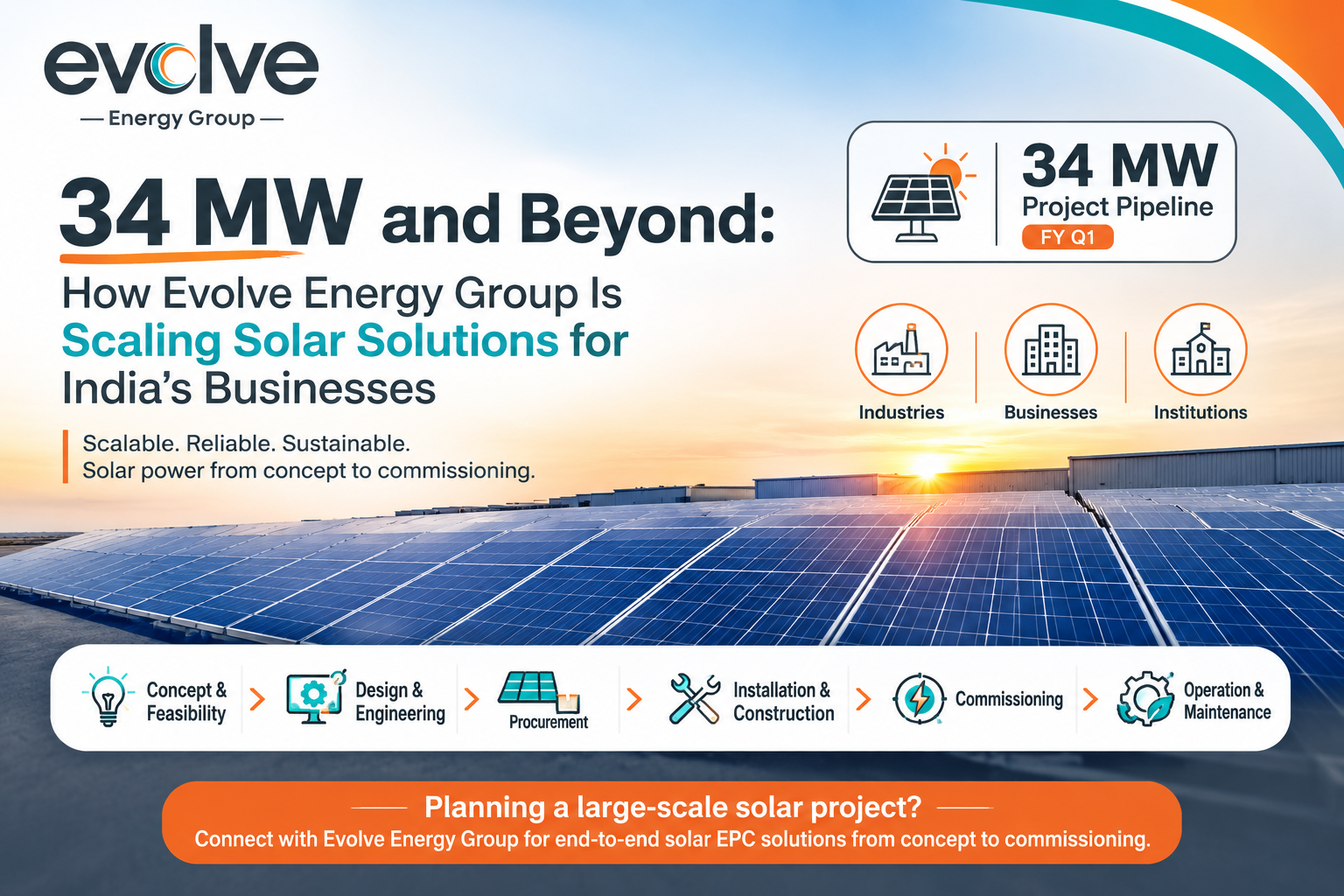
Large-scale solar projects need more than solar panels and inverters. They need careful planning, strong engineering, reliable equipment, skilled installation and proper project management.
This is where a solar EPC company in India plays an important role.
EPC stands for Engineering, Procurement and Construction. A professional EPC partner manages the solar project from the first feasibility study to design, equipment procurement, construction, testing and commissioning. Many experienced solar EPC contractors also provide long-term operation and maintenance support after the plant starts generating power.
For businesses, industries and institutions planning a large solar project, choosing the right EPC partner can make a major difference to project cost, performance, timelines and long-term returns.
Evolve Energy Group provides end-to-end solar EPC solutions covering engineering, procurement, construction, commissioning and post-installation support.
What Is a Solar EPC Company?
A solar EPC company manages the complete process of developing and installing a solar power project.
The three main stages of EPC are:
- Engineering: Site assessment, system design, electrical planning and project engineering.
- Procurement: Selection and purchase of solar modules, inverters, structures, cables and other equipment.
- Construction: Installation, electrical work, testing, commissioning and project handover.
For large projects, the EPC company also coordinates multiple teams, suppliers, contractors and technical activities.
Instead of managing several separate vendors, the project owner gets one team responsible for the overall execution.
This approach can reduce coordination problems, improve quality control and make project management easier.
How Does a Solar EPC Company Execute a Large-Scale Solar Project?
A large solar project normally follows several stages. Each stage helps reduce project risks and ensures that the final plant can deliver the expected energy output.
1. Understanding the Client’s Energy Requirements
Every solar project starts with a clear understanding of the customer’s power requirements.
The EPC team studies factors such as:
- Current electricity consumption
- Monthly and annual energy demand
- Peak power requirements
- Electricity tariff
- Available installation area
- Existing electrical infrastructure
- Grid connection
- Future energy requirements
- Project budget
- Investment model
For an industrial facility, the team may also review production schedules and daytime electricity consumption.
This information helps the EPC company decide the suitable plant capacity and project configuration.
Why it matters: A solar plant should match the actual energy requirement of the business. Oversizing or undersizing the system can affect project economics and energy utilization.
2. Site Survey and Feasibility Study
After understanding the requirement, the EPC team performs a detailed site assessment.
For a rooftop project, the team checks:
- Available roof area
- Roof condition
- Structural strength
- Shading
- Roof orientation
- Access for installation
- Electrical connection points
- Safety requirements
For a ground-mounted solar plant, the assessment can include:
- Land availability
- Site access
- Terrain
- Soil conditions
- Drainage
- Shading
- Grid connectivity
- Transmission requirements
- Environmental and local considerations
The team uses these findings to determine whether the proposed site can support the planned solar project.
A good feasibility study can prevent costly changes later.
3. Solar Plant Design and Engineering
Once the site data is available, the engineering team creates the project design.
The design can cover:
- Solar module layout
- Inverter selection
- DC and AC system design
- Mounting structures
- Cable routing
- Earthing system
- Lightning protection
- Transformer requirements
- Grid connection
- Monitoring system
- Safety systems
The engineering team also estimates expected energy generation.
At this stage, the project owner can understand the proposed plant capacity, expected generation, major equipment and overall project requirements.
Evolve Energy Group describes its EPC approach as customized engineering based on the customer’s energy requirements, followed by equipment procurement, construction and commissioning.
4. Selecting the Right Solar Equipment
Equipment quality has a direct impact on solar plant performance and long-term reliability.
A professional solar EPC company in India evaluates equipment based on technical specifications, performance, reliability, warranty, availability and project requirements.
Key components include:
Solar Modules
The EPC team selects modules based on project size, available space, efficiency, performance and expected operating conditions.
Solar Inverters
Inverters convert the DC electricity produced by solar modules into AC electricity used by electrical systems and the grid.
Mounting Structures
Structures support the solar modules and need to match the site, wind conditions, installation method and project design.
Cables and Electrical Equipment
The project also requires suitable DC cables, AC cables, junction boxes, transformers, switchgear, protection equipment and other balance-of-system components.
Evolve Energy Group also operates in solar manufacturing and offers modules, inverters and mounting structures alongside its EPC services.
This integrated capability can help businesses simplify procurement and project coordination.
5. Procurement and Quality Control
After finalizing the engineering design, the procurement stage begins.
The EPC team coordinates equipment sourcing, delivery schedules and quality checks.
Good procurement planning helps prevent:
- Equipment shortages
- Installation delays
- Compatibility issues
- Unplanned project costs
- Poor-quality components
The EPC company should also maintain proper documentation for equipment specifications, warranties and testing.
For a large-scale project, timely procurement matters because a delay in one major component can affect the entire construction schedule.
6. Civil and Structural Work
The construction phase begins after the project design and procurement plans reach the required stage.
For ground-mounted plants, civil work may include:
- Site preparation
- Foundations
- Internal roads
- Drainage
- Equipment foundations
- Structure installation
For rooftop projects, the team focuses on safe structure installation without affecting the building’s integrity.
The EPC team must coordinate civil, structural and electrical activities so that different work packages move forward without unnecessary delays.
7. Solar Module and Equipment Installation
Once the site is ready, installation teams begin assembling the solar plant.
This stage can include:
- Mounting structure installation
- Solar module installation
- Inverter installation
- DC cable installation
- AC cable installation
- Electrical equipment installation
- Earthing
- Lightning protection
- Monitoring system installation
Large-scale projects require strong coordination between engineering, construction, safety and quality teams.
Experienced solar EPC contractors follow project-specific installation plans and safety procedures to maintain quality throughout the construction process.
8. Electrical Integration and Grid Connectivity
A solar plant needs proper electrical integration before it can start commercial operation.
The EPC team works on the connection between the solar plant and the customer’s electrical system or grid.
This can involve:
- AC system integration
- Transformers
- Switchgear
- Protection systems
- Metering
- Synchronization
- Grid connection
- Electrical testing
The exact requirements depend on the project size, location, connection arrangement and applicable regulations.
This stage requires careful engineering because electrical faults can affect both safety and plant performance.
9. Testing and Commissioning
Commissioning marks one of the most important stages of the solar project.
Before handover, the EPC team checks whether the plant performs according to the approved design and project requirements.
Typical checks can include:
- Electrical testing
- Equipment inspection
- Inverter testing
- Protection system checks
- Monitoring system checks
- Grid synchronization
- Safety checks
- Performance verification
The team then commissions the plant after completing the required checks and approvals.
At this point, the solar power plant moves from construction into operation.
10. Project Handover and Documentation
A professional EPC company does not simply finish installation and leave the site.
The project handover should include relevant technical and operational documents.
These can include:
- As-built drawings
- Equipment details
- Warranty information
- Test reports
- Operation manuals
- Maintenance guidelines
- Project documentation
- Monitoring access details
Proper documentation helps the plant owner manage the system more effectively throughout its operating life.
11. Operation and Maintenance After Commissioning
Commissioning is not the end of the solar project’s lifecycle.
Regular solar O&M helps maintain energy generation and identify problems before they cause major downtime.
O&M activities can include:
- Solar module inspection
- Cleaning
- Inverter checks
- Electrical inspection
- Performance monitoring
- Preventive maintenance
- Corrective maintenance
- Fault detection
- Plant performance analysis
Evolve Energy Group provides solar O&M services that include inspections, performance monitoring, preventive maintenance and corrective actions.
A strong O&M plan helps protect the owner’s investment and maintain plant performance over the long term.
Why Should Businesses Choose an Experienced Solar EPC Company in India?
Large solar projects involve significant investment and technical coordination. Working with an experienced EPC partner offers several advantages.
One Point of Project Management
The client can work with one EPC team instead of coordinating multiple independent vendors.
Better Project Coordination
Engineering, procurement, construction and commissioning teams work toward one project plan.
Quality Equipment Selection
Experienced EPC companies can evaluate equipment based on technical and project requirements rather than focusing only on the lowest purchase price.
Better Risk Management
Early site studies and detailed engineering can identify potential problems before construction begins.
Faster Project Execution
Proper planning and procurement can reduce avoidable project delays.
Long-Term Support
An EPC partner that also provides O&M can continue supporting the solar plant after commissioning.
How to Choose the Right Solar EPC Contractors?
Before signing an EPC contract, businesses should evaluate the following:
1. Project Experience
Ask about similar commercial, industrial or utility-scale projects completed by the EPC company.
2. Engineering Capability
Check whether the company has an in-house or experienced technical team capable of handling project design and engineering.
3. Equipment Quality
Review the proposed solar modules, inverters, structures and other major components.
4. Project Execution Process
Understand how the EPC contractor manages design, procurement, construction, testing and commissioning.
5. O&M Support
Ask whether the company provides long-term maintenance and performance monitoring.
6. Commercial Model
Compare available investment models such as CAPEX and OPEX/PPA based on your business requirements.
Evolve Energy Group offers both CAPEX and OPEX models for businesses looking at different approaches to solar investment.
7. After-Sales Support
A reliable EPC partner should remain available after project commissioning.
What Are the Benefits of End-to-End Solar EPC?
An end-to-end EPC approach gives the project owner a single team for the complete solar journey.
The major benefits include:
- Simplified project management
- Better coordination
- Improved quality control
- Clear project responsibility
- Better procurement planning
- Reduced execution risks
- Professional installation
- Easier commissioning
- Long-term O&M support
- Better focus on project performance
For large businesses, this approach can make solar adoption more predictable and easier to manage.
Why Evolve Energy Group for Large-Scale Solar EPC Projects?
Evolve Energy Group provides end-to-end EPC solutions covering engineering, procurement, construction and commissioning. Its EPC services cover commercial and industrial projects as well as utility-scale solar applications.
The company also supports solar manufacturing, solar parks and O&M, allowing customers to access multiple parts of the solar value chain through one organization.
Evolve’s EPC process focuses on:
Engineered Design → Equipment Procurement → Construction & Commissioning → Operation & Maintenance
This approach helps businesses move from the initial project idea to a functioning solar power plant with a clear execution plan.
You can learn more about Evolve Energy Group’s Solar EPC Solutions and discuss your project requirements with the team.
The company also shares project updates and renewable energy insights through its LinkedIn page and project post.
Frequently Asked Questions
What does EPC mean in solar projects?
EPC means Engineering, Procurement and Construction. A solar EPC company manages the design, equipment procurement, construction, testing and commissioning of a solar power project.
What does a solar EPC company do?
A solar EPC company handles the complete project lifecycle, from feasibility and engineering to procurement, installation, testing and commissioning. Many EPC companies also provide O&M services after project completion.
Why should businesses hire solar EPC contractors?
Businesses can work with experienced solar EPC contractors to simplify project management, improve coordination, select suitable equipment and manage installation and commissioning through one project team.
How long does a large-scale solar project take?
The timeline depends on project capacity, land or rooftop conditions, design complexity, equipment availability, approvals, grid connectivity and construction requirements. A detailed project schedule gives the client a more accurate timeline.
What should I check before choosing a solar EPC company in India?
Check the company’s project experience, engineering capabilities, equipment quality, construction process, safety practices, commissioning approach, warranties, O&M support and overall commercial proposal.
Does an EPC company provide maintenance after installation?
Many full-service EPC companies provide O&M after commissioning. Evolve Energy Group offers solar O&M services covering performance monitoring, inspections, preventive maintenance and corrective maintenance.
Can an EPC company handle industrial and utility-scale solar projects?
Yes. Solar EPC contractors can develop projects for industries, commercial facilities, institutions and utility-scale applications. Evolve Energy Group specifically lists commercial and industrial solar solutions and utility-scale solar projects among its EPC applications.
Conclusion
A large-scale solar project requires much more than installing photovoltaic modules.
From feasibility and engineering to procurement, construction, grid integration, commissioning and O&M, every stage affects the final performance and financial value of the project.
Choosing an experienced solar EPC company in India gives businesses a structured way to manage this complete process.
For companies planning industrial, commercial or utility-scale solar projects, the right EPC partner can provide the technical expertise, project coordination and long-term support needed to move from concept to commissioning with confidence.
Planning a large-scale solar project? Connect with Evolve Energy Group for end-to-end solar EPC solutions from concept to commissioning.

Evolve Energy