
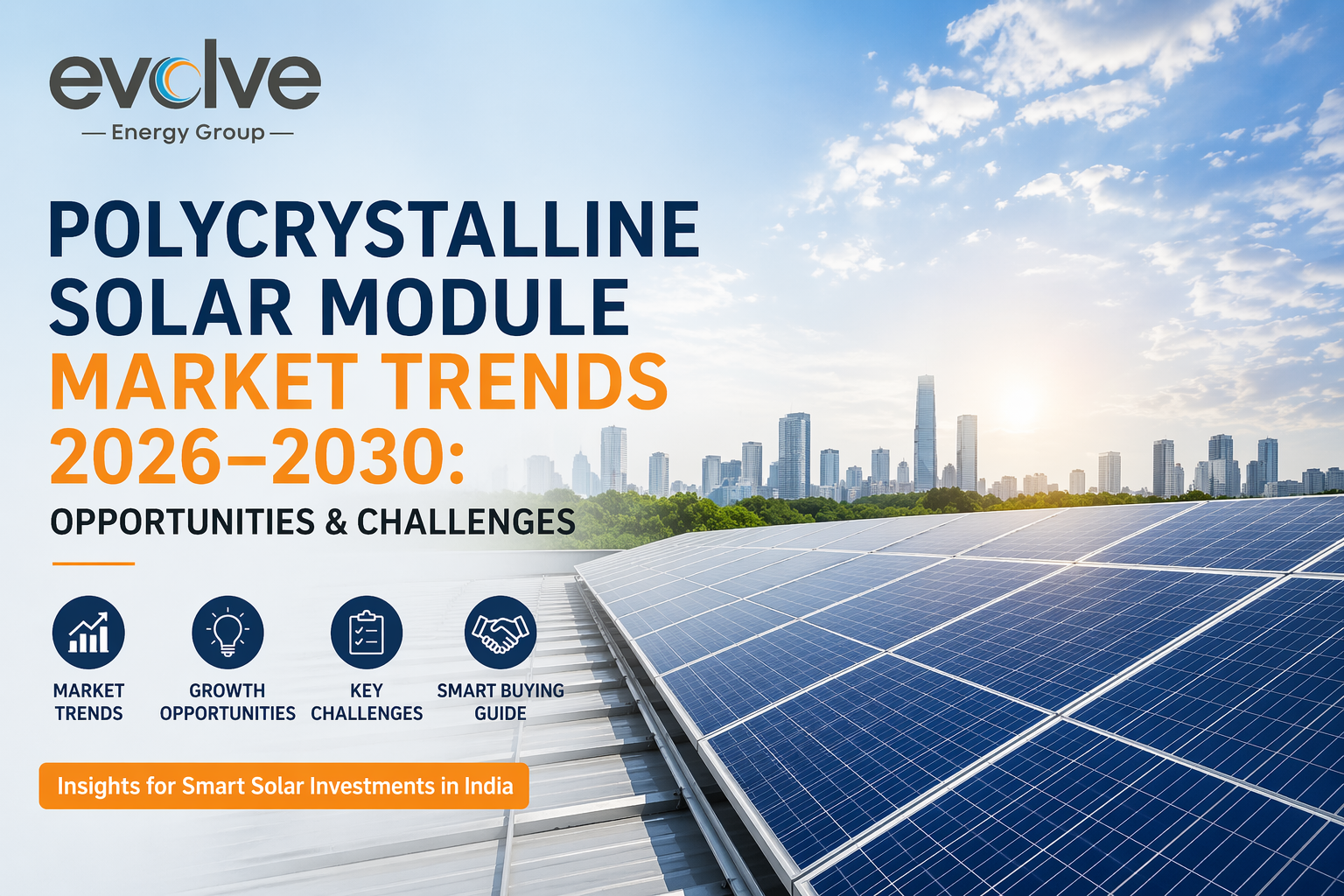
Polycrystalline Solar Module Market Trends 2026–2030: Opportunities & Challenges for Smart Buyers
Introduction
If you’re planning to invest in solar energy, one question likely comes up early: Are polycrystalline solar modules still a smart choice in 2026 and beyond? With rapid advancements in solar technology and shifting price dynamics, making the right decision can directly impact your return on investment.
This guide breaks down the latest market trends, pricing outlook, opportunities, and challenges surrounding polycrystalline solar modules, especially in the Indian market. Whether you’re a business owner, EPC contractor, or evaluating solar module suppliers, you’ll find clear, practical insights to help you make confident decisions.
What Are Polycrystalline Solar Modules and Where Do They Stand Today?
Polycrystalline solar modules are made from multiple silicon crystals, making them more affordable compared to monocrystalline panels. While slightly less efficient, they remain popular in cost-sensitive markets like India.
Current Market Position (2026)
- Widely used in commercial and utility-scale projects
- Preferred where space is not a constraint
- Competitive pricing keeps demand steady despite rising alternatives
In India, many large-scale solar installations still rely on polycrystalline modules due to their lower upfront cost, especially in rural and semi-urban projects.
Key Market Trends (2026–2030)
1. Gradual Shift Toward High-Efficiency Modules
Monocrystalline and TOPCon technologies are gaining traction due to higher efficiency. However, polycrystalline modules continue to hold ground in price-sensitive segments.
What this means for buyers:
If your priority is affordability over maximum efficiency, polycrystalline modules remain a viable option.
2. Price Stabilisation and Competitive Manufacturing
India’s push for domestic manufacturing under initiatives like PLI (Production Linked Incentive) is improving local supply chains.
- Reduced dependency on imports
- Better pricing consistency
- Growth of reliable solar module suppliers in India
3. Demand Growth in Tier 2 and Tier 3 Cities
Solar adoption is accelerating beyond metros into smaller cities and industrial clusters.
Example: Warehouses, cold storage units, and MSMEs in states like Maharashtra and Gujraat are increasingly opting for cost-effective solar setups using polycrystalline modules.
4. Hybrid System Integration
Polycrystalline modules are often used in hybrid systems (solar + battery + grid) where overall system cost matters more than peak efficiency.
This trend is especially relevant for:
- Commercial backup systems
- Agricultural solar pumps
- Off-grid applications
Opportunities for Buyers and Businesses
Lower Investment Barrier
Polycrystalline modules offer a budget-friendly entry point into solar energy. This is ideal for:
- Small businesses
- First-time solar adopters
- Large land-based installations
Reliable Performance in Indian Conditions
They perform well in:
- High temperatures
- Dust-heavy environments
- Long-duration sunlight exposure
While efficiency is slightly lower, their durability and stability make them suitable for Indian climates.
Strong Supplier Ecosystem
India now has a growing network of solar module suppliers, offering:
- Competitive pricing
- Faster delivery timelines
- Easier after-sales support
Key Challenges to Consider
Lower Efficiency Compared to New Technologies
Polycrystalline panels typically have:
- Efficiency range: 15%–17%
- Compared to 20%+ for monocrystalline
This means you need more space to generate the same power.
Gradual Market Shift
Global trends are slowly favoring advanced technologies like:
- TOPCon
- HJT (Heterojunction)
While polycrystalline modules won’t disappear overnight, their market share may decline.
Resale and Long-Term Value
Buyers looking at long-term asset value may prefer higher-efficiency panels, especially for urban or space-limited installations.
How to Choose the Right Solar Module Supplier in India
Choosing the right supplier is as important as choosing the right technology.
Key Factors to Evaluate
1. Certifications and Quality Standards
Look for:
- BIS certification (mandatory in India)
- IEC standards compliance
2. Warranty and Performance Guarantee
- Product warranty: 10–12 years
- Performance warranty: Up to 25 years
3. Proven Track Record
Check:
- Past installations
- Client reviews
- EPC partnerships
4. Transparent Pricing
Avoid unusually low prices—they often indicate compromised quality.
When Should You Choose Polycrystalline Solar Modules?
Polycrystalline modules are a smart choice if:
- You have ample installation space
- Budget is a key constraint
- You’re planning large-scale or ground-mounted systems
- ROI timeline is more important than peak efficiency
For rooftop projects with limited space, higher-efficiency modules may be more suitable.
FAQs: Polycrystalline Solar Modules
Are polycrystalline solar modules still worth buying in 2026?
Yes, especially for budget-conscious buyers and large installations where space is available. They offer a strong balance of cost and reliability.
What is the lifespan of a polycrystalline solar module?
Most modules last 25 years or more, with gradual efficiency reduction over time.
How do polycrystalline modules compare to monocrystalline?
Polycrystalline modules are cheaper but less efficient. Monocrystalline panels generate more power in less space but cost more upfront.
Are polycrystalline modules suitable for Indian weather?
Yes, they perform well in high temperatures and dusty conditions, making them suitable for most regions in India.
How do I find reliable solar module suppliers?
Focus on certified suppliers with proven experience, transparent pricing, and strong after-sales support. Working with an experienced EPC partner can simplify this process.
Conclusion
The polycrystalline solar module market between 2026 and 2030 is evolving—but far from obsolete. While newer technologies are gaining attention, polycrystalline modules continue to offer a practical, cost-effective solution for many Indian buyers.
The key is to align your choice with your specific needs—budget, space, and long-term goals. For many businesses and large-scale projects, polycrystalline modules still deliver solid value.
If you’re evaluating options or comparing solar module suppliers, consider speaking with an experienced EPC provider to ensure the right system design and supplier selection.

Evolve Energy