
Solar EPC for Commercial Buildings: From Site Assessment to Power Generation
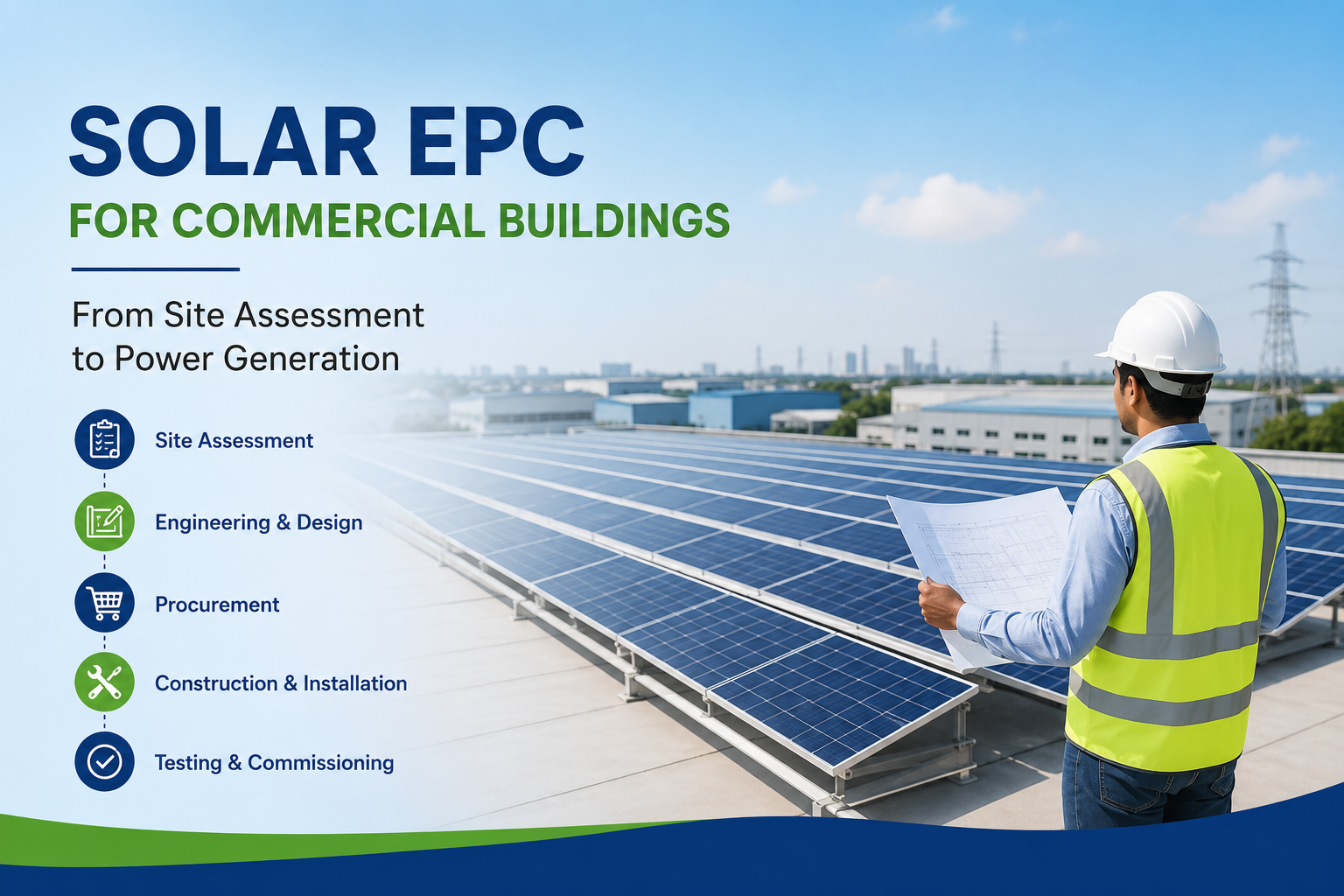
Businesses are looking for practical ways to reduce electricity costs and improve energy efficiency. Solar power has become a strong option for offices, factories, warehouses, educational institutions, hospitals, and other commercial buildings.
However, installing solar panels is not just about placing modules on a roof. A successful project needs proper planning, engineering, equipment selection, installation, testing, and long-term support.
This is where experienced solar EPC contractors can make a difference.
A professional EPC partner can manage the complete project from the first site visit to final commissioning, helping businesses build a solar system that matches their energy needs and site conditions.
What Is Solar EPC?
Solar EPC stands for Engineering, Procurement, and Construction.
In a solar project, an EPC company manages the major stages of the installation under one coordinated process.
The three main areas include:
- Engineering: Site assessment, system design, electrical planning, equipment sizing, and project planning.
- Procurement: Selection and supply of solar modules, inverters, mounting structures, cables, protection equipment, and other components.
- Construction: Installation, electrical work, testing, commissioning, and project handover.
Instead of coordinating several different vendors, a business can work with one experienced solar EPC partner for the complete project.
Why Do Commercial Buildings Need Solar EPC Contractors?
Commercial solar projects can vary greatly in size and design. A factory may have high daytime electricity demand, while a warehouse may have a large roof but different structural requirements.
Experienced solar EPC contractors study these factors before designing the system.
They can help businesses with:
- Site feasibility assessment
- Electricity consumption analysis
- Solar system sizing
- Rooftop and ground-mounted system design
- Solar module selection
- Inverter selection
- Structural planning
- Electrical design
- Installation
- Testing and commissioning
- Performance monitoring
- Operation and maintenance
This complete approach can reduce project coordination issues and help ensure that different system components work together properly.
How Does a Commercial Solar EPC Project Work?
A well-planned solar project usually follows several important stages.
1. Site Assessment
The first step involves understanding the proposed installation site.
The EPC team evaluates factors such as:
- Available roof or land area
- Roof condition
- Structural suitability
- Shading
- Solar exposure
- Electrical infrastructure
- Existing power consumption
- Space for inverters and other equipment
- Safety and access requirements
For a rooftop project, the team also checks whether the roof can support the planned solar installation.
A detailed site assessment helps avoid design problems later in the project.
2. Energy Consumption Analysis
The next step involves understanding how much electricity the business uses.
The EPC team may study electricity bills, load patterns, operating hours, connected loads, and daytime energy consumption.
This information helps determine the appropriate solar plant capacity.
For example, a business that uses most of its electricity during the day may benefit from a system designed around its daytime load.
The goal is not simply to install the largest possible system. The goal is to design a system that makes sense for the site’s energy requirements.
3. Solar System Design
After collecting site and energy data, the EPC team develops the solar system design.
This may include:
- Solar module layout
- Inverter capacity
- String configuration
- Mounting structure design
- DC and AC cable planning
- Electrical protection
- Earthing and lightning protection
- Monitoring systems
- Grid connection planning
A good design considers both current requirements and the practical conditions of the site.
4. Equipment Procurement
The next stage involves sourcing the required solar equipment.
A commercial solar project may require:
- Solar PV modules
- Solar inverters
- Mounting structures
- DC and AC cables
- Junction boxes
- Protection devices
- Earthing equipment
- Monitoring systems
- Transformers and switchgear for applicable projects
Choosing compatible and reliable components is important for long-term system performance.
Businesses should also consider warranty, technical support, product quality, and availability of service before purchasing equipment.
What Role Does the Solar Inverter Play?
The solar inverter is one of the key components of a solar power plant.
Solar modules generate DC electricity, while most commercial electrical equipment uses AC electricity. The inverter converts the generated DC power into usable AC power.
A suitable inverter can also support:
- Energy monitoring
- System protection
- Power management
- Performance tracking
- Fault detection
Businesses should select inverter capacity and technology according to the solar plant design, electrical requirements, and application.
You can learn more about solar inverter solutions through the Evolve Energy Group Solar Inverter page.
5. Solar Installation and Construction
Once equipment reaches the project site, installation begins.
The EPC team coordinates activities such as:
- Mounting structure installation
- Solar module installation
- DC cabling
- Inverter installation
- AC electrical work
- Earthing
- Protection system installation
- Monitoring system setup
- Electrical integration
Safety remains important throughout this stage.
Commercial projects often operate while construction takes place, so proper planning helps reduce disruption to normal business activities.
6. Testing and Commissioning
Installing the equipment does not mean the project is complete.
Before commissioning, the EPC team checks the complete system to ensure that the equipment and electrical connections operate correctly.
Testing may cover:
- Solar module strings
- Cable connections
- Inverters
- Earthing systems
- Protection equipment
- Electrical parameters
- Monitoring systems
- Grid connection
After successful testing, the solar plant can move into operation.
7. Monitoring and Performance Management
After commissioning, monitoring helps businesses understand how their solar plant performs.
Modern solar systems can provide information about:
- Daily energy generation
- Monthly generation
- Inverter performance
- System faults
- Plant availability
- Energy trends
Regular monitoring can help identify performance issues early and support better system management.
How Can Solar EPC Help Businesses Save Time?
Managing a commercial solar project through separate vendors can create communication and coordination challenges.
An experienced EPC company can manage multiple project activities through one coordinated process.
This can help businesses:
- Simplify project management
- Reduce coordination between vendors
- Improve installation planning
- Maintain better project control
- Get technical support from one EPC partner
- Move from planning to commissioning more smoothly
The right EPC partner can therefore become more than an installation contractor. It can act as a complete solar project partner.
How Do You Choose the Right Solar EPC Contractors?
Choosing the right EPC company requires more than comparing project prices.
Before selecting solar EPC contractors, businesses should evaluate:
Experience
Check the company’s experience with projects similar to yours in size and application.
Technical Capability
Look for an EPC team that understands system design, electrical integration, equipment selection, installation, and commissioning.
Product Quality
Ask about the solar modules, inverters, mounting systems, cables, and protection equipment used in the project.
Project Management
A reliable EPC partner should have a clear process for planning, procurement, installation, testing, and handover.
After-Sales Support
Solar is a long-term investment. Ask about monitoring, maintenance, troubleshooting, and service support after commissioning.
Project Transparency
A professional EPC company should clearly explain the system design, equipment specifications, expected generation, project timeline, and scope of work.
Why Choose Evolve Energy Group for Solar EPC Solutions?
Evolve Energy Group provides solar solutions for businesses looking to adopt reliable and efficient solar power.
The company’s EPC approach covers important project stages, from planning and engineering to procurement, installation, testing, and commissioning.
For businesses evaluating a commercial or industrial solar project, working with an experienced EPC partner can simplify the process and help create a system based on actual energy requirements.
Explore the Evolve Energy Group EPC solutions to understand how an end-to-end solar project can be planned and executed.
Frequently Asked Questions
What does a solar EPC company do?
A solar EPC company manages the engineering, procurement, construction, installation, testing, and commissioning of a solar power project.
Why should businesses hire solar EPC contractors?
Businesses can work with solar EPC contractors to simplify project management and get coordinated support for design, equipment procurement, installation, testing, and commissioning.
Is solar EPC suitable for industrial projects?
Yes. EPC solutions can support commercial and industrial solar projects, including rooftop and larger solar power installations.
How long does a commercial solar project take?
The timeline depends on system size, site conditions, equipment availability, approvals, electrical work, and project complexity. An EPC company can provide a project-specific timeline after the site assessment.
What should I check before choosing a solar EPC company in India?
Review the company’s experience, technical expertise, project portfolio, equipment quality, installation capability, warranties, after-sales service, and project management process.
Conclusion
A commercial solar project involves much more than installing solar panels. Solar EPC contractors manage the complete journey—from site assessment and engineering to procurement, installation, testing, and commissioning.
Choosing the right EPC partner can help businesses plan a solar system around their actual electricity requirements, site conditions, and long-term energy goals.
If you are planning a commercial or industrial solar project, Evolve Energy Group can help you explore an end-to-end solar EPC solution.
Planning a commercial solar project? Contact Evolve Energy Group for professional solar EPC solutions from concept to commissioning.

Evolve Energy